Start with an Observation

Electricity prices are climbing—3% nationally projected in 2025—but Texas, where clean energy is scaling fastest, expects a 12% price drop.

Follow the Numbers

We wanted to know:
What if the rest of the country looked like Texas?
What would that mean for the average American household?
With support from our PhD economists, we dug into the data:
Since 2019, Texas has expanded solar capacity by 729%, wind by 49%, and added 9,300 MW of battery storage—an 8,941% increase.
+8,941%That growth has added 80,000 GWh of clean electricity to the grid.
80,000 GWh
Conduct the Analysis

We built a model that extrapolated Texas’s (ERCOT) energy data to the national level.
Then, we were able to estimate the impact of a nationwide clean energy acceleration:
Electricity bill savings per household: $258.
$258Indirect savings from lower-cost goods and services: $183.
$183Total annual savings per household: $441.
$441Inflation reduction from combined effects: 0.58 percentage points.
0.58%
Brand the Idea & Watch It Fly
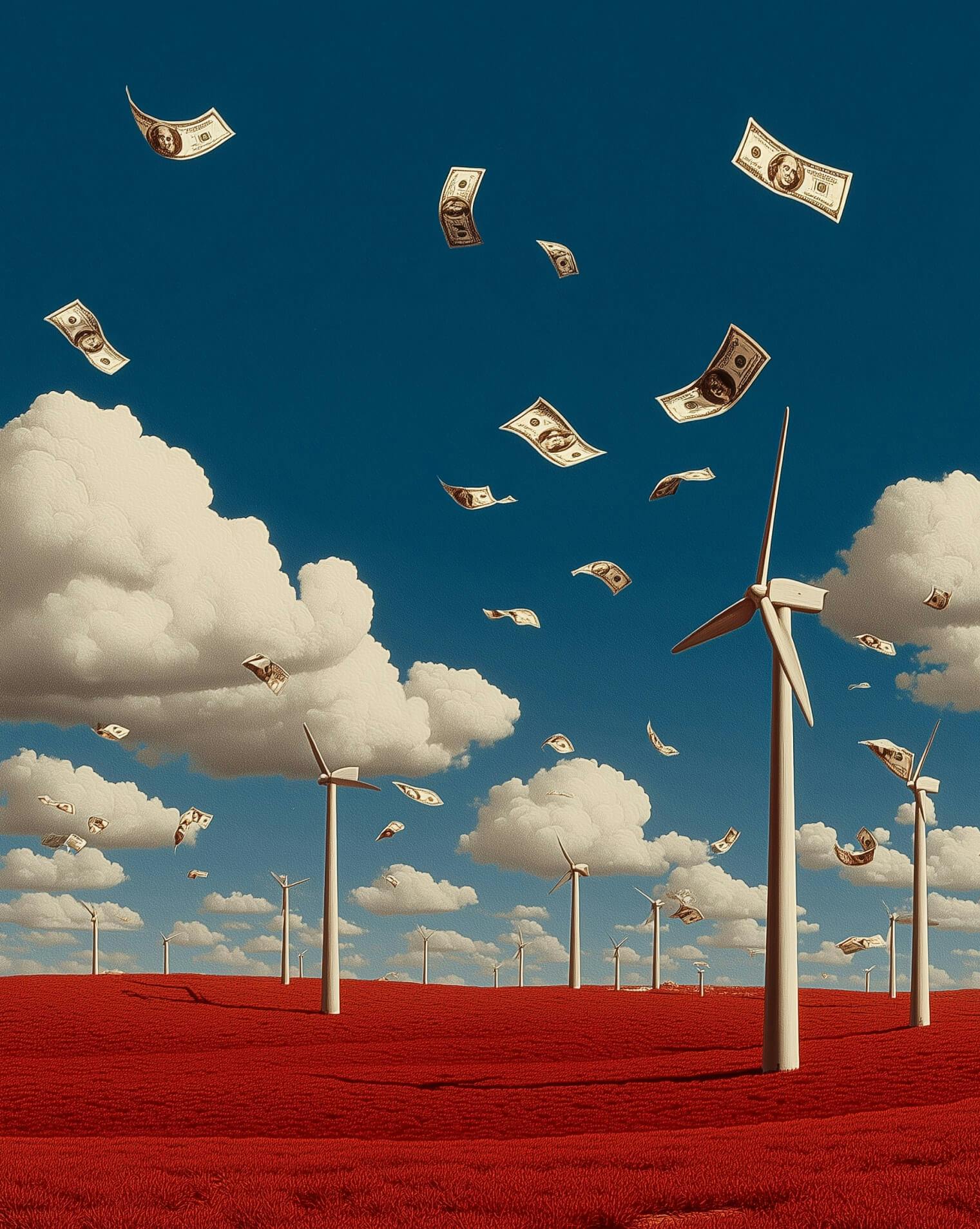
We gave the numbers a name
The Clean Energy Dividend.
A phrase that didn’t just convey clean energy is good for the environment. It reframed clean energy as what it truly is: A deflation-fighting, bill-cutting economic engine.